
Rick and Morty and the Human Cost of Artificial Intelligence

Rick Sanchez is probably the most accurate portrait of unchecked technological power ever put on television. The fact that he’s a cartoon drunk seems to be the only thing stopping people from taking that more seriously.
Rick and Morty doesn’t get enough credit for what it actually is, which isn’t simply science fiction. The show isn’t really interested in imagining better technology or a more advanced future. What it examines is what happens when the usual constraints disappear, when someone is smart enough and untouchable enough that human nature has nowhere left to hide.
It’s not a new storytelling move. Make a character beyond consequence and their worst instincts become much harder to disguise (think Succession or House of Cards). Rick and Morty just applies that logic to technology, with a precision that gets more uncomfortable the longer you work in AI.

The best satire doesn’t actually predict the future. It just watches the present more carefully than everyone else, especially the parts that make us squirm. The writers aren’t psychic, they’re merely paying super close attention to emergent behaviour and following the logic where(ever) it leads.
And if you’ve spent any time lately watching how AI is being built and deployed, even the craziest bits are landing a bit too close to home these days.
Like Glootie’s manic insistence on building an app at any cost, that reads now like a parody of vibe coding. Zero friction to creation, zero interest in what happens after the build. The goal is the build, and everything else is someone else’s problem.
Then there’s the Meeseeks, which feel like early stateless agents. Laser-focused on the task they’re given, and prone to total unravelling the moment that task turns out to be poorly defined, context dependent, or worst of all, Jerry-shaped and messily human. Which, in practice, most real tasks are.
And my personal favourite, the butter robot. Hyper-capable and just self-aware enough to ask the question nobody wants to answer. What is my purpose. Pass the butter. It’s funny until it isn’t.

Under the gadgets and sci-fi scenarios, these are really jokes about responsibility, specifically about what happens once the technology is already running.
Rick builds things and moves on. That’s his whole pattern. The work is technically done, and whatever comes after belongs to someone else. He’s not malicious about it. He’s just uninterested in the gap between what he intended and what unfolds.
That gap is usually Morty’s problem.
If you spend enough time watching how AI systems are progressing, that dynamic feels less like satire and more like a reasonably accurate job description.
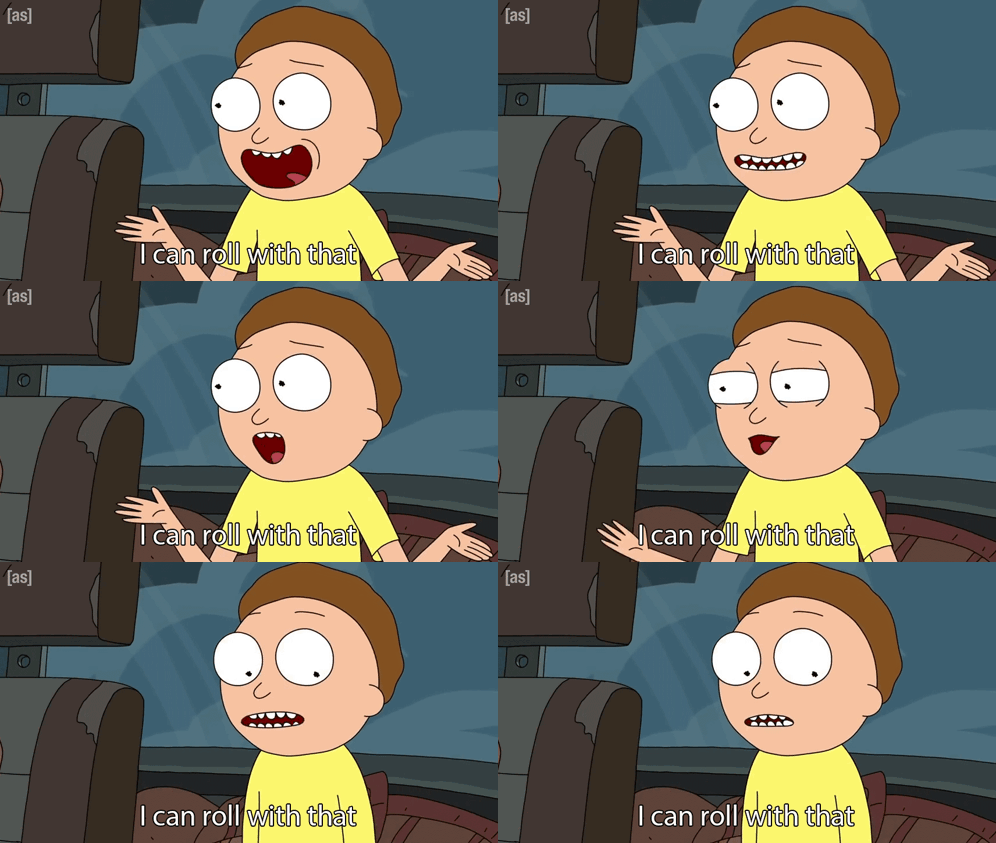
Morty isn’t intelligent the way Rick is intelligent. He doesn’t build anything himself, or even really conceptualise anything on his own. What he does is stay. He exists inside the systems Rick creates and moves on from. He’s there for the edge cases and the aftermath, the parts that can’t be abstracted away or solved with another layer of cleverness.
In AI terms, Morty is the human in the loop. His function, in practice, is to absorb damage.
He’s the cost centre nobody really models for.
This is where the show gets uncomfortable. As AI systems become more autonomous, the human role shifts. Fewer people are needed to produce, and more are needed to clean up, review, moderate, and carry the moral weight of decisions the system made but couldn’t own.
Morty isn’t bad at the systems. His presence, messy and stubbornly human, is usually what makes them survivable, and that’s no small thing.
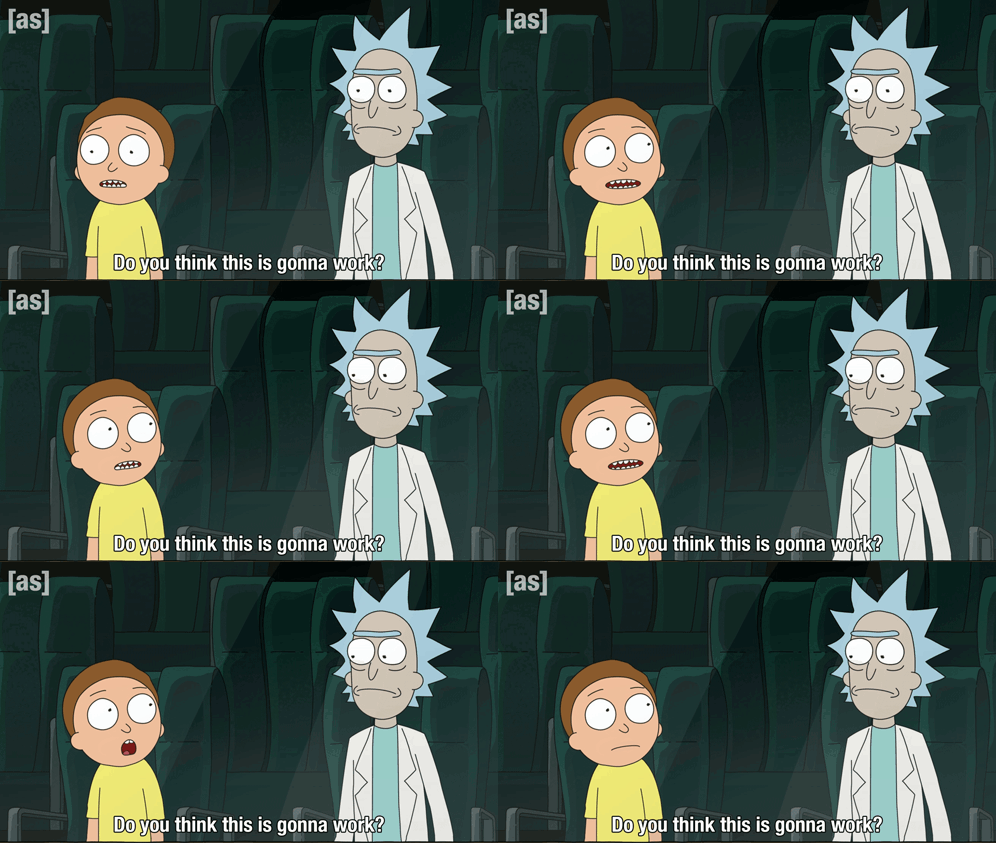
We laugh at Morty because he’s neurotic and asks uncomfortable questions at the worst possible times. But he’s also the only character who deals with what happens after the clever idea has moved on.
Rick gets the breakthrough and Morty gets the aftermath. That’s a typical organisational dynamic dressed up as a comedy trope, and it’s playing out in real companies right now.
The show doesn’t try to forecast specific models or platforms. It watches incentives and follows behaviour to its most uncomfortable conclusion. You laugh because the situation is recognisable.
There’s a line Rick throws out early in the series, usually right before something goes catastrophically wrong. “Don’t think about it.” It’s a joke that doubles as a philosophy. Build fast and assume that if something breaks there’s always another universe to escape to.
The problem, for most businesses, is that escape isn’t an option.

That posture made sense when intelligence was rare and effort was the challenge. It makes much less sense now that intelligence is at our fingertips and the binding constraint has shifted to responsibility.
The tension was already there. AI just made it harder to ignore.
Morty rarely resists what’s happening. He simply feels it. And then he says the quiet part out loud. “I’m not okay with this.” But…then he keeps going anyway.
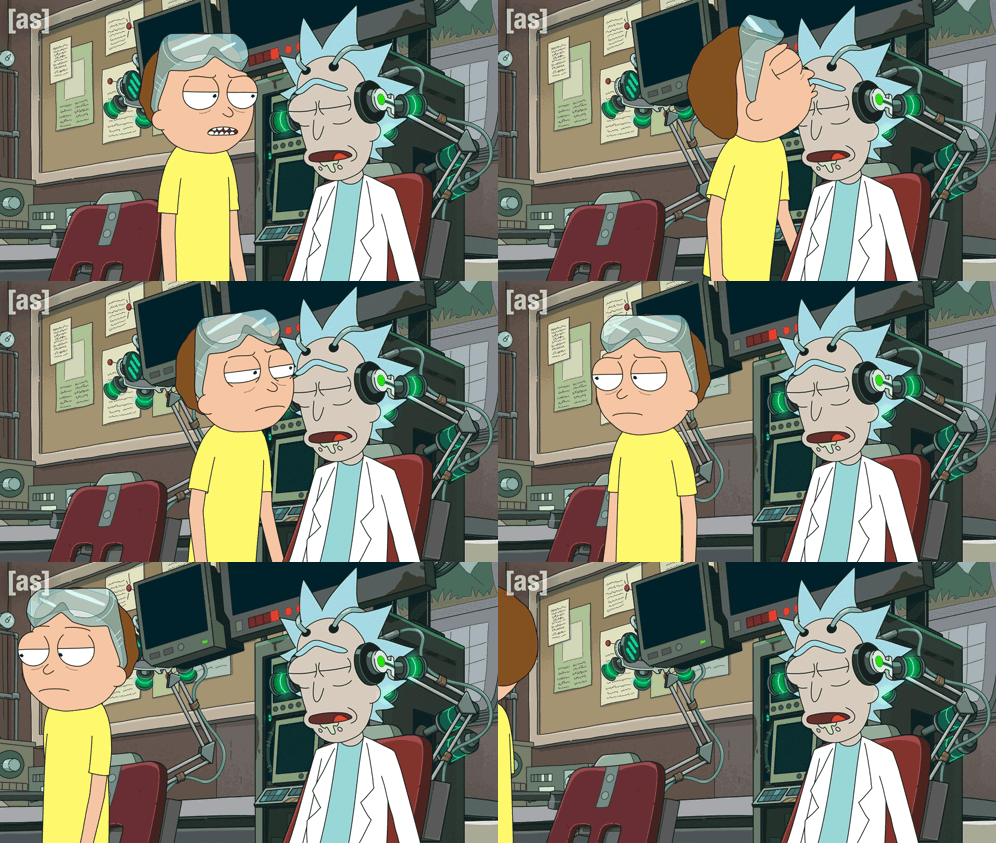
The future shaped by AI gets defined by what’s left for humans to do once the systems are running. The intelligence of the systems matters less than people tend to assume.
As intelligence scales, responsibility concentrates. It pools in whoever is left in the room once the clever work is done.
That’s what Rick and Morty keeps showing us, often without appearing to. Rick’s inventions almost always work. The damage happens downstream or offscreen, to someone who didn’t sign up for it. Responsibility relocates when intelligence grows.
And in this version of things, it usually ends up with Morty.
The question AI is asking of businesses right now is whether you’re prepared to own the aftermath, the parts where someone still has to say “I’m not okay with this” and mean it.
Rick never sticks around for those moments, but someone always does.
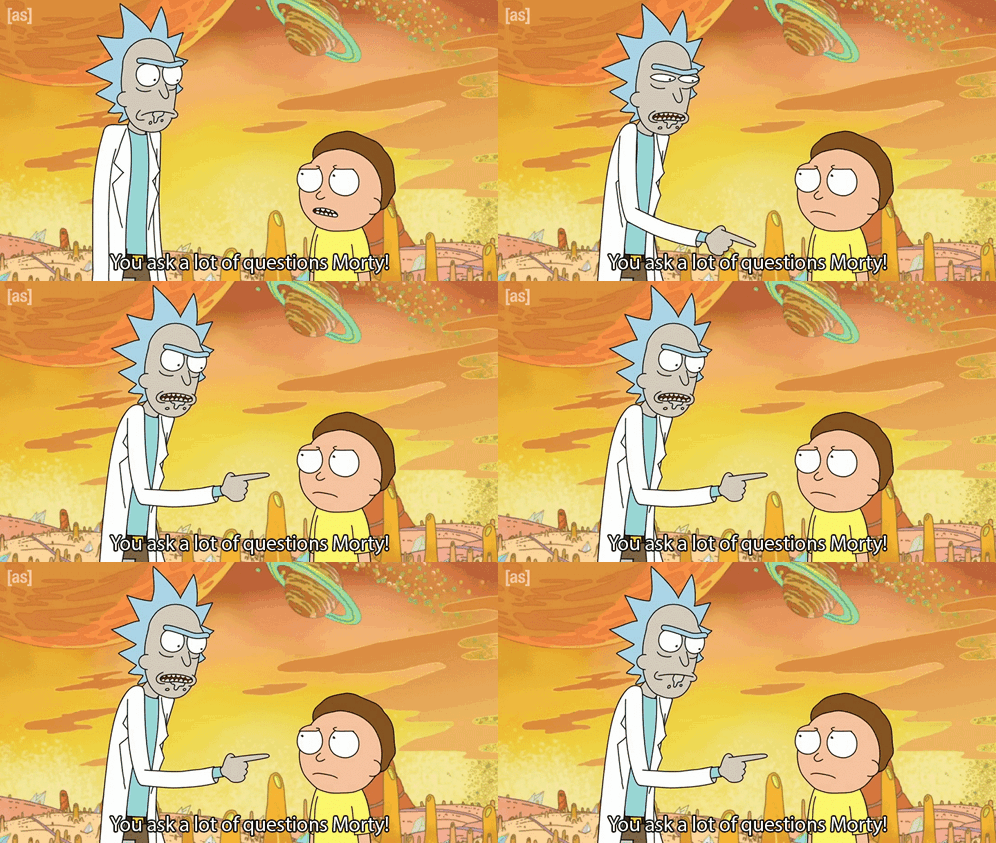
That’s the part most AI conversations underplay. Systems will keep getting more capable, and the question that matters is where the human weight of those systems lands once they do. Who absorbs the confusion. Who feels it when optimisation meets reality.
Rick and Morty doesn’t argue for slowing down or stopping. It just reveals what happens when nobody designs deliberately for the Mortys of the world. When someone ends up in that role by accident rather than intention, the results tend to be messy in ways that were predictable but almost entirely ignored.
It’s what happens when human judgment and accountability get treated as afterthoughts. But they’re the load-bearing parts of the system.
Morty’s role is to make progress survivable.
The question AI is leaving us with is whether we’re willing to design for the humans who have to stay once those systems are running.
The Mortys.
Explore our AI services
Brisbane-based AI consulting across strategy, automation, agents, and data.
